Artemis II Astronauts Capture Stunning Photo of Earth Setting Behind the Moon
by Jeremy Gray · Peta PixelNASA Artemis II astronauts captured a beautiful photo, “Earthset,” showing the Earth setting beyond the lunar horizon. This is the Artemis II crew’s unique take on Apollo 8 astronaut Bill Anders’ iconic “Earthrise” photo.
When Apollo 8 astronauts Bill Anders, Frank Borman, and Jim Lovell traveled to the far side of the Moon in 1968, they became the first humans ever to see it firsthand. During this incredible exploration, Anders captured the photo below, “Earthrise,” one of the most famous images ever captured in space.
Nearly 60 years later, while breaking Apollo 13’s record for the farthest distance humans have ever traveled from Earth, Artemis II astronauts Reid Wiseman, Victor Glover, Jeremy Hansen, and Christina Koch captured “Earthset,” a stunning spiritual successor to Anders’ “Earthrise.”
“Earthset” is the Artemis II crew’s first public photo from their trip to the dark side of the Moon, showing Earth setting behind the Moon’s crater-filled surface.
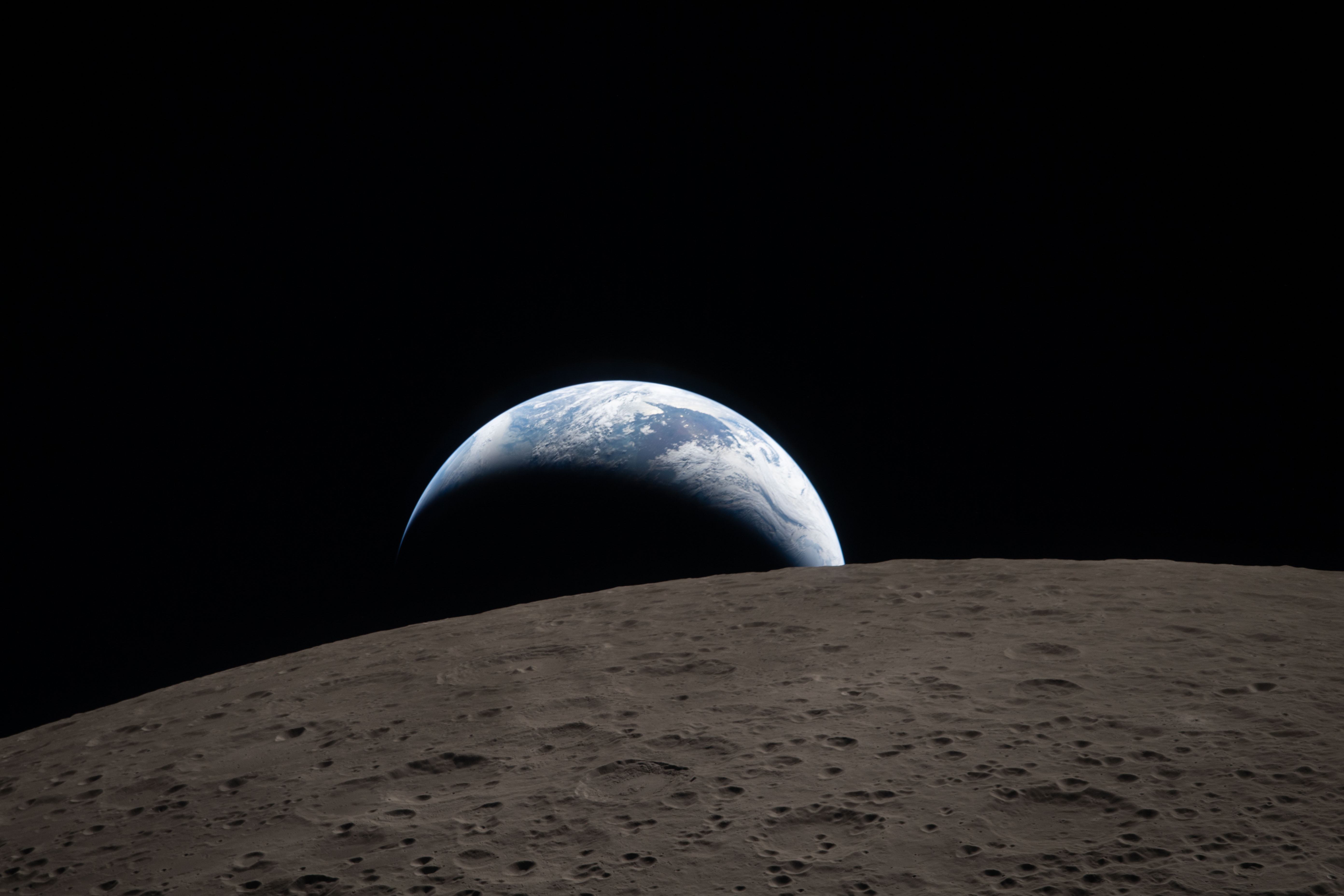
“Humanity, from the other side. First photo from the far side of the Moon. Captured from Orion as Earth dips beyond the lunar horizon,” writes the White House, which was the first to share the new photo on social media platforms.
During Artemis II’s lengthy livestream yesterday, the crew worked closely with the NASA Artemis II scientific team to ensure they were capturing great photos on their Nikon D5 DSLRs and the Nikon Z9 the team brought onboard. In the case of the new “Earthset” photo, the crew used the tried-and-true Nikon D5 with the Nikon 80-400mm f/4.5-5.6 telephoto zoom lens set to 400mm and f/8. The incredible photo was shot at 1/1000s and ISO 400.
As NASA explains, the dark portion of Earth seen in the photo was experiencing nighttime, while the day side shows swirling clouds above Australia and Oceania.
In the foreground, the Moon’s large Ohm crater is visible. This crater has terraced edges and central peaks. These peaks “form in complex craters when the lunar surface, liquefied on impact, splashes upwards during the crater’s formation,” per NASA.
NASA is continuing to share many of the incredible photos the Artemis II captured during its historic lunar flyby yesterday, April 6, so there will be plenty more to see and discuss.
Image credits: NASA