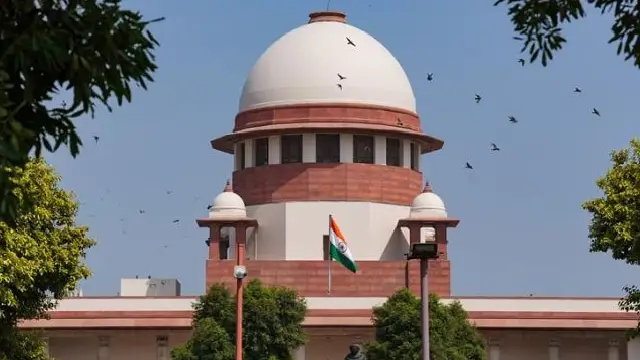
Supreme Court reserves judgment on plea for withdrawing life support of comatose man
by Devanshi Patel · KalingaTVAdvertisement
New Delhi: The Supreme Court on Thursday reserved its judgment on a plea filed by the father of a 31-year-old man, who has been in a comatose state for over 12 years, seeking withdrawal of his son’s artificial life support.
The patient is identified as Harish Rana who sustained severe head injuries after falling from the fourth floor of a building in 2013. Since then, he has remained bed-ridden and dependent on artificial support for survival.
According to sources, a bench of Justices J.B. Pardiwala and K.V. Viswanathan heard the case for nearly an hour, with submissions from Additional Solicitor General Aishwarya Bhati, representing the Union government, and advocates Rashmi Nandakumar, representing Harish’s father, Ashok Rana.
As per reports during the hearing the court emphasized on the importance of family making a “consistent and well-considered” decision regarding the patient’s care.
Advocate Nandakumar requested the bench to avoid using the term “passive euthanasia” and instead refer to the process as “withdrawing or withholding life-sustaining treatment.”
The petitioner also suggested that hospitals should nominate doctors for medical boards tasked with examining patients when families request the withdrawal of life support.
Advertisement
Earlier, on January 13, the Supreme Court judges personally met Rana’s parents and his younger brother. The family expressed that they did not want Harish to continue suffering unnecessarily. The bench recorded their statement, noting:
“They conveyed that the medical treatment over the past years should be discontinued and nature allowed to take its course. They believe that Harish is suffering excessively and should be relieved of further pain.”
The court reviewed reports from a secondary medical board at AIIMS, Delhi, and described the findings as “sad.” The primary medical board had previously concluded that Rana had negligible chances of recovery. According to the 2023 Supreme Court guidelines, both a primary and secondary medical board must give expert opinions before artificial life support can be withdrawn.
This marks the second time in two years that Rana’s father has approached the Supreme Court seeking withdrawal of life support. On November 8, 2024, the court noted the Union Health Ministry’s recommendation for home care, assisted by the Uttar Pradesh government, with regular medical supervision. If home care is not feasible, the court suggested transfer to a district hospital in Noida.
The Supreme Court previously agreed with the Delhi High Court’s findings that a medical board was not required in this case. The courts noted that Rana is not on a ventilator or other mechanical support and is being fed via a feeding tube, indicating no formal case for passive euthanasia. However, the court acknowledged the prolonged vegetative state and the financial and emotional strain on his elderly parents.
The Delhi High Court had rejected a similar plea in July 2024, stating that Rana was sustaining himself without mechanical aid, and therefore did not qualify for passive euthanasia.
Also Read:Supreme Court Stays FIRs Against ED Officers in I‑PAC Raid Case, Seeks Responses; Next Hearing Scheduled for February 3
Advertisement