Himachal Disaster Management Official Outlines Key Challenges and Initiatives at Relief Officers’ Conference
by KalingaTV Bureau · KalingaTVAdvertisement
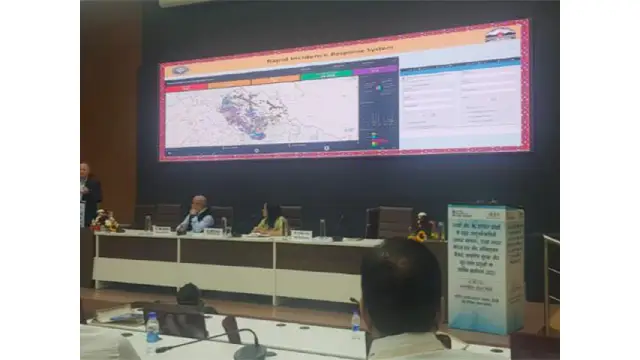
New Delhi: The Special Secretary (Disaster Management), Government of Himachal Pradesh, Pushpendra Rana, delivered a comprehensive presentation at the Relief Officers’ Conference, highlighting the scale, extent and evolving challenges of disaster management in the state.
Drawing attention to Himachal Pradesh’s fragile Himalayan ecology and increasing exposure to extreme weather events, he emphasised the growing complexity of managing disasters, including floods, landslides, cloudbursts, and glacial lake outburst floods (GLOFs). He noted that the frequency and intensity of such events are placing unprecedented pressure on response systems, infrastructure, and local administrations.
Underscoring the need for a strengthened institutional response, the Special Secretary called for enhanced financial, technical, and administrative support from the Central Government, National Disaster Management Authority (NDMA), and other national and international organisations.
He stressed the importance of investing in resilient infrastructure, early warning systems, and robust communication networks to enable proactive and timely disaster response.
He also highlighted several key initiatives undertaken by the State Disaster Management Department to improve preparedness and response capacity. These include the Rapid Incident Reporting System for real-time information flow, the State Disaster Management Fund (SDMF) portal for streamlined financial management, and the Himachal Pradesh Disaster Management Information System (HPDMIS) for data-driven decision-making.
Advertisement
Further, he shared progress on advanced early warning mechanisms such as the Glacial Lake Outburst Flood (GLOF) Early Warning System, along with efforts to strengthen community-level response through mobilisation of trained volunteers.
Initiatives like HIM Kavach for field-level protection and resilience, as well as externally supported programs such as the AFD-supported projects and the World Bank-assisted HP READY project, were also discussed as critical components of the state’s disaster risk reduction strategy.
The Special Secretary emphasised that disaster management in a Himalayan state requires a shift from reactive response to anticipatory governance, supported by technology, institutional coordination, and sustained investment.
(ANI)
Also Read: Prasoon Joshi Appointed Chairman of Prasar Bharati, watch
Advertisement