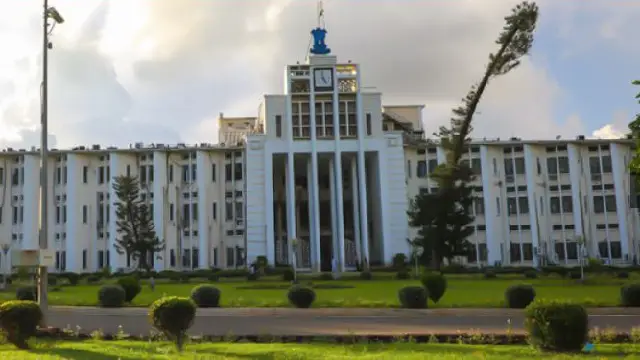
Secretaries in Odisha to visit allotted districts, review welfare schemes on ground
by Subadh Nayak · KalingaTVAdvertisement
Bhubaneswar: Odisha government has directed all the secretaries and senior officers of the State Government to visit allotted districts and review welfare schemes on the ground, informed Development Commissioner-Cum-Additional Chief Secretary Deoranjan Kumar Singh.
In a letter to all Principal Secretaries, Commissioner-cum-Secretary to Government, Special Secretary to Government (SDG) P&C Department, MD, IDCO/MD of National Health Mission, Director of Municipal Administration, MD of Odisha State Civil Supplies Corporation, and Director-Cum- Additional Secretary of Drinking Water & Sanitation, Singh said that they are encouraged to plan a 2-3-day programme to visit the allotted district at least once during the period and spend one night in the District/Subdivisional headquarters.
Advertisement
During the course of the visit, the secretaries and senior officers could look into the implementation of various people-oriented schemes and programmes of the State Government as well as Centrally Sponsored Schemes, in the following areas: –
- Supervision of the implementation of important Government schemes/ programmes (As per Annexure-II) and interact with the members of the public from different walks of life to ensure delivery of public services to the people in an effective manner and implementation of infrastructure projects. It may be noted that this list is merely illustrative and not exhaustive.
- During district visits, officers shall visit District Headquarters Hospitals, PHCs/CHCs, interact with patients and attendants, and assess the availability of essential services, human resources, and medicines. Special attention should be given to fire safety compliance, emergency preparedness, and overall quality of healthcare delivery.
- They should randomly select the areas for visit within the district, including the inaccessible, hard-to-reach areas and tribal dominated areas. If required on foot. Schemes relating to PVTGs should be reviewed. They may also identify strategic issues of the district, which can be followed up at the State level by the officers concerned.
- They may visit at least one Gram Panchayat and assess the level of saturation in the coverage of various development and welfare programmes of Government for the provision of basic facilities in that particular Gram Panchayat.
- During the district visits, Secretaries should review the progress of ongoing drinking water supply projects, identify bottlenecks, and communicate specific issues causing delays to the Secretary PR&DW / H&UD as the case may be, for timely resolution. Emphasis should be given on early completion of Functional Household Tap Connections (FHTCs), which will benefit the rural population.
- In a significant move to enhance the nutritional intake and educational outcomes of students, mid-day meal scheme has now been extended to Class 9 and 10 students with an aim to support the nutritional needs of students and reduce dropout rates at the secondary level. Secretaries during their visit need to ensure the provision of MDM to all Students in the School and should have at least one meal a day (on a payment basis) in either an ST/SC Hostel or MDM in schools or in an AAHAAR Kendra or in an orphanage to check the quality of food and the ambience.
- They may take the opportunity to visit the AWCs, ensure completion of AWC building, if not completed. The reason for delay in completion of the building must be identified and addressed. Similarly, the School and Hostel buildings of Tribal Students, specifically the girls’ hostel building, should be visited. Interact with the students/inmates and get their feedback on important issues like safety, security, basic facilities, behaviour meted out to them, etc.
- During the visit, officers are advised to check the Constitution of ICC & constitution of anti-ragging cell in the educational institutions. They should speak to girl students and women employees on the provision of basic facilities like separate toilets, common rooms, etc. They may also discuss with students on their health issues, including substance abuse and opportunities for recreation to deal with mental stress.
- They should review the status of banking services in the district, including accessibility of banking infrastructure, functioning of brick-and-mortar branches, BC/CSP operations, digital payment systems, and resolution of public grievances related to banking services. Special focus shall be given to underserved and rural areas facing banking constraints.
- In the eight major DMF districts (like Angul, Jajpur, Jharsuguda, Keonjhar, Koraput, Mayurbhanj, Rayagada, and Sundargarh), the officers may review the utilisation of funds under DMF and OMBADC and also visit projects sanctioned under DMF/OMBADC.
- After the field visit, a half-day meeting may be convened with all District Level Officers in the presence of the Collector to share the observations made during the field visit and review the functioning of various schemes, particularly the major strategic projects of the district. Further, Collectors may be advised to promote the One District One Product (ODOP) initiative and facilitate appropriate market linkages for the identified products.
- Officers assigned Aspirational districts (marked with an asterisk) to specially review the performance of the district under the Aspirational Districts Programme and proper utilization of incentives/award money.
- It may be noted that 40 blocks of Odisha, as per the list enclosed (in Annexure III), have been declared as Aspirational Blocks. Officers may review the progress of these blocks as well.
- Officers to interact closely with all the junior officers posted in the district, including IAS (Officer Trainees) and may take them along in the course of their field visits, if any.
- Officers are advised to visit the allotted district at least once in three months for at least two days and upload their visit note, major findings after each visit in the Par-e-darshan portal with a copy to the Chief Secretary and to the undersigned.
Also Read: PUCC Fine Reduced In Odisha: Rs 10,000 Penalty Slashed To Rs 6,000, Watch
Advertisement