East of Eden Recap: The Story of Mankind
by Roxana Hadadi · VULTUREEast of Eden
In the Valley
Season 1 Episode 3
Editor’s Rating ★★★★★
Previous Next
Previous Episode
Next Episode
Adam Trask doesn’t listen. What Cathy does isn’t right: ignoring and rejecting her sons, shooting Adam, abandoning them all. But Adam doesn’t listen. Cathy didn’t want to go to California. She doesn’t want to live in Salinas Valley. She has no intention of being a mother. If this were a normal situation, these two kooky kids should have had these conversations before they got married. Of course, this isn’t a normal situation. But I say all this because I think it’s important to emphasize that both Cathy and Adam went into this marriage with intentions they didn’t share with each other. Cathy was opportunistic. Adam was delusional. And now two baby boys are growing up with a father who can’t bear to look at them and a mother who — well, we’ll get to that.
I already thought East of Eden was a strong adaptation before “In the Valley,” but after this episode, I’m so impressed by how in tune with John Steinbeck’s themes the creative team is and how willing they are to pull out certain moments from the text that deserve time to sink into us and that challenge popular conceptions about this period in American history. Actor Hoon Lee has talked about how surprised he was by this episode’s code-switching scene, in which Lee drops his use of pidgin English to reveal crisp enunciations and a wide vocabulary, and how even more surprised he was to learn that was all straight out of Steinbeck’s 1952 novel. But I love how “In the Valley” clues us in to both Lee’s booksmarts and social intelligence before that conversation with fellow Trask adviser and Irish immigrant Samuel Hamilton (Ciarán Hinds) — we linger on Lee’s leather-bound books, which he clearly organizes with care, and his face as he picks up on Cathy’s disinterest in her pregnancy and in her marriage. Zoe Kazan and director Garth Davis show us how important Lee will be to this story by actually, well, showing it. So far, East of Eden has been a story about gender; now, it’s a story about race. Lee is an American. He has Chinese heritage, yes, but he was born in the U.S., was educated in the U.S., and is living in the U.S. Why is it so hard for white people to see that? And why is it so easy for them to erase him from the fabric of this country?
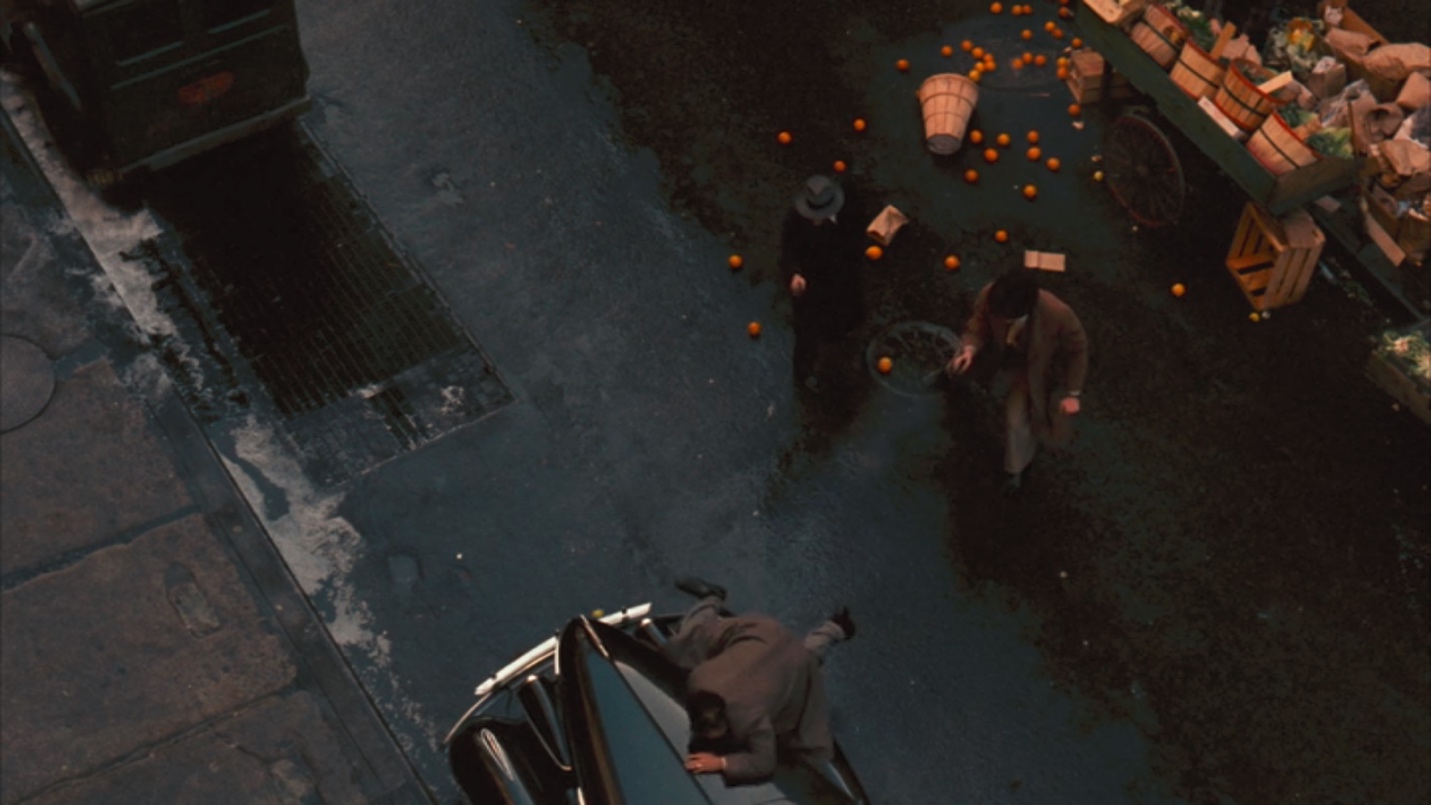
“In the Valley” is a dense, perfect, five-out-of-five-stars episode that starts with another evocative series addition to the text: a wedding portrait of Adam and Cathy that then becomes a portrait of Adam, Cathy, and Charles together, at Charles’s request. The way the three pose for this picture, with Charles and Cathy standing and Adam seated between them, makes it look like Charles and Cathy are the just-married pair and Adam is their guardian or father. Maybe everyone would have been happier that way! The knowledge that Charles asked for this picture as a “keepsake”? My heart shattered into a million pieces, because I absolutely believe that Charles wanted this picture to remember both Adam and Cathy, the brother he reconnected with and the first woman in whom he saw some of himself. That final conversation between Charles and Cathy is another addition, a bittersweet one that aligns these two together in an understanding of Adam that no one else in the world possesses. Adam’s going to get his heart broken, and all of this seems so inevitable. Am I interpreting Charles’s “Bring me back an orange” as both a nod to Steinbeck’s The Grapes of Wrath and an acknowledgment of how often oranges signify violence in cinema? I think so. Did I gasp when Cathy pulled her fingers out from Charles’s? Of course. Could I fix Charles? Yes, folks. That’s my babygirl.

I haven’t talked about Adam Trask much in these recaps yet, but at this point in East of Eden, he’s coming more fully into focus through Christopher Abbott’s performance, which has made Adam sincere, self-possessed, and also so single-minded that he ends up ignoring the world and the people around him. Adam is a nice man. Is he a good man? Once Adam and Cathy get to Salinas Valley in 1900, Adam tells his new friend and employee Samuel that his ambitions — to own land, buy the perfect house, and have a farm — are to make Cathy happy, which he insists she’ll be “with time.” But what about the fact that she keeps saying she doesn’t want any of this? Adam isn’t his father, but there’s a similar tunnel vision going on in Cyrus Trask’s firstborn son, shown in his refusal to deviate from a plan that he’s already decided upon. Lee, the “Chinaman” whom Adam hires at Samuel’s suggestion to cook and clean, notices the imbalance in Adam and Cathy’s marriage. Samuel notices it. The doctor who treats Cathy after she attempts a self-inflicted abortion notices it, even if he falls under Cathy’s sway and believes her story that she was trying to save her children from epilepsy that runs in her family. (The lies this woman comes up with on the fly, my God.)
And yet, of course, these are all men, and they all see Cathy as being in the wrong, the unnatural woman who has no curiosity about her changing body or about Adam’s elaborate plans for this land. “Some folk have a capacity for appetite that a whole heaven and earth of cake won’t satisfy,” Samuel says, but Cathy doesn’t want heaven and earth. She just wants her own life, and her extreme individualism — her refusal to be tied down and trapped, her need to make herself small in order to escape — leads Cathy to shoot Adam with the gun he bought to protect her, walk out the door, and never look back. Florence Pugh flitters between dead eyes and resentful glares in this episode, but I did see a glimmer of sympathy in that scene where she shot Adam, like she was hearing Charles’s “poor bastard” analysis of his older brother all over again. “Cathy came. She changed my world the way a star shell changes a battleground,” Adam had said, but a star shell illuminates an enemy. Adam was always going to fundamentally be Cathy’s obstacle; he just didn’t know it.
Before Cathy bails on the whole “domestic responsibilities” thing, Lee and Samuel connect with each other as two outsiders who know something is very wrong with Mr. and Mrs. Trask and who decide to trust each other. Lee revealing himself to Samuel as an American-born man basically cosplaying with his “pidgin and shuffle” because people expect him to “talk Chinese talk, wear Chinese fashion” is a major extension of faith. He is so polite yet clipped in this conversation; so firm in his assessment that, unlike Samuel, “I have no chance of mixing” with white Americans; so unyielding when Samuel tells him, “Must be a lonely life.” It is, and that’s what binds Lee and Adam together after Cathy fires Adam’s (Chekhov’s, really) gun. Cathy leaves her twin boys motherless, but Adam leaves them fatherless. He’s so despondent after Cathy leaves him that he totally recedes from his sons for a year, meaning that Lee becomes the dad who stepped up. Lee speaking Cantonese to the babies? Adorable. Incredible!
Also incredible: That Samuel sucker-punches Adam back into reality to force him to give his sons names and to finally pay attention to the life that’s passing him by. Is Adam right when he says that naming the boys Cain and Abel, as Samuel suggests, would damn them and put them on a path where Cain eventually betrays Abel? (Or maybe even kills him, as in the Bible story?) I don’t think so. I agree with Lee and his analysis that rejection is what children fear most — fate is an abstract concept for them, but love? Love is real, and feeling the absence of love is real. Which is why I think the boys now named Caleb and Aron are damned, but it’s not because of their names. It’s because they have a father who is still caught up on Cathy, still obsessed with news of her, still living his life in the shadow of her absence. “The weeds will grow, and the brambles,” Samuel warns, but Adam isn’t ready to listen yet. Still, even to the cries of his sons, he isn’t ready to listen.
California Dreams
• My favorite period-appropriate detail of this episode: I appreciate that Cathy has a slight mustache.
• My least favorite period-appropriate detail of this episode: The sheriff who calls Lee “Ching Chong” can fuck right off.
• Maybe you’re normal, but some of us cried for a little bit after this episode thinking about Adam crumpling up the letter he wrote inviting Charles to live with them and cried even more thinking about Charles all alone on his farm.
• I wish the series had the budget to actually film in California, but New Zealand’s wide-open skies and mountains are pretty.
• So … are the twins biologically Adam’s sons, or Charles’s? Discuss.